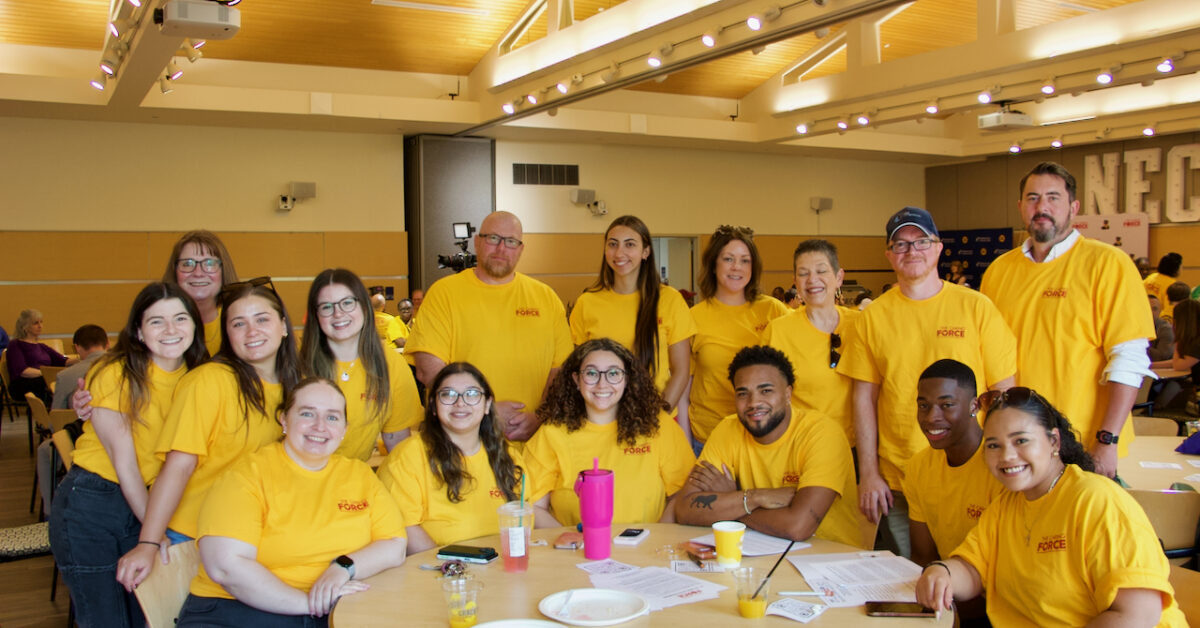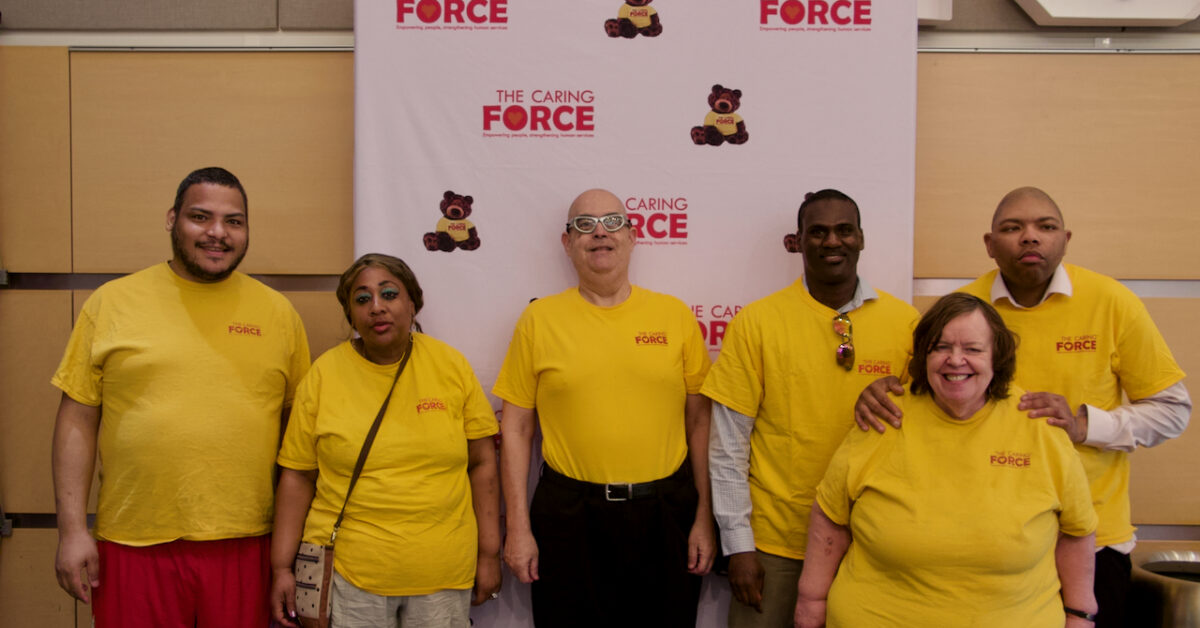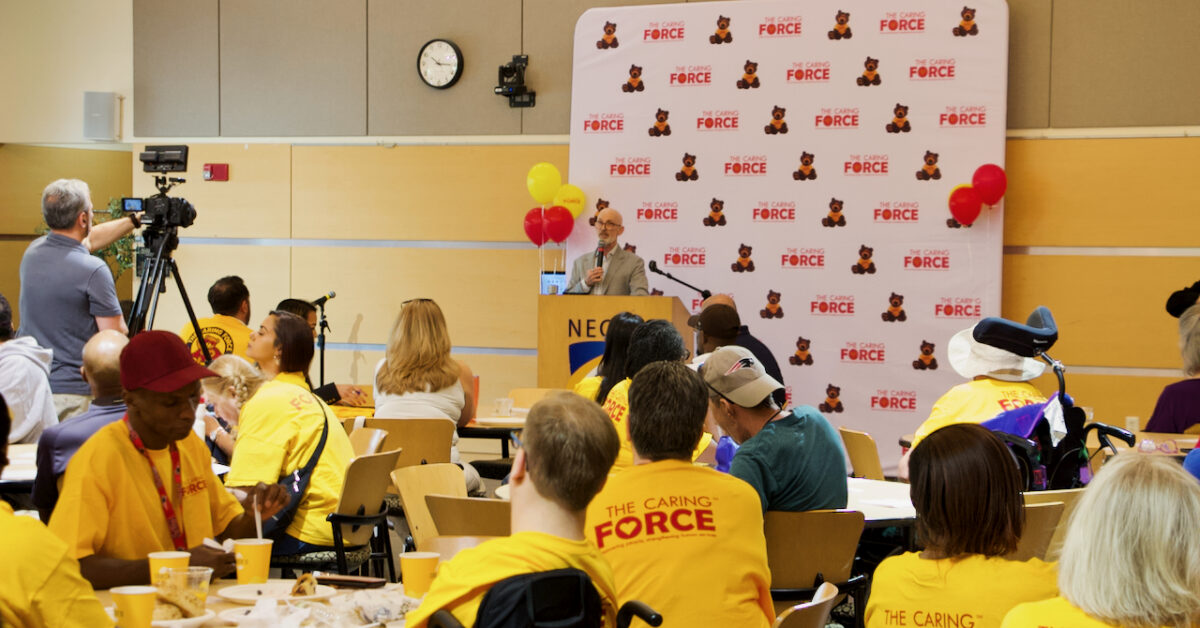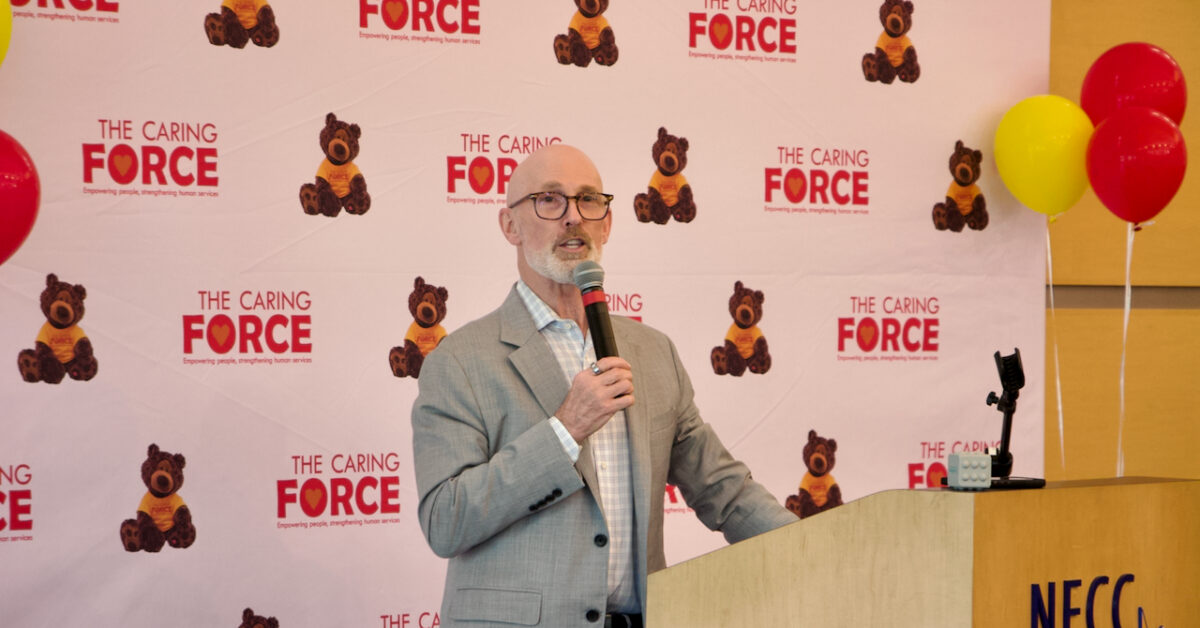
On Friday, June 5, The Caring Force returned to the Merrimack Valley for its second rally in the region, gathering over 200 human services workers, advocates, legislators, and persons served at Northern Essex Community College in Haverhill.
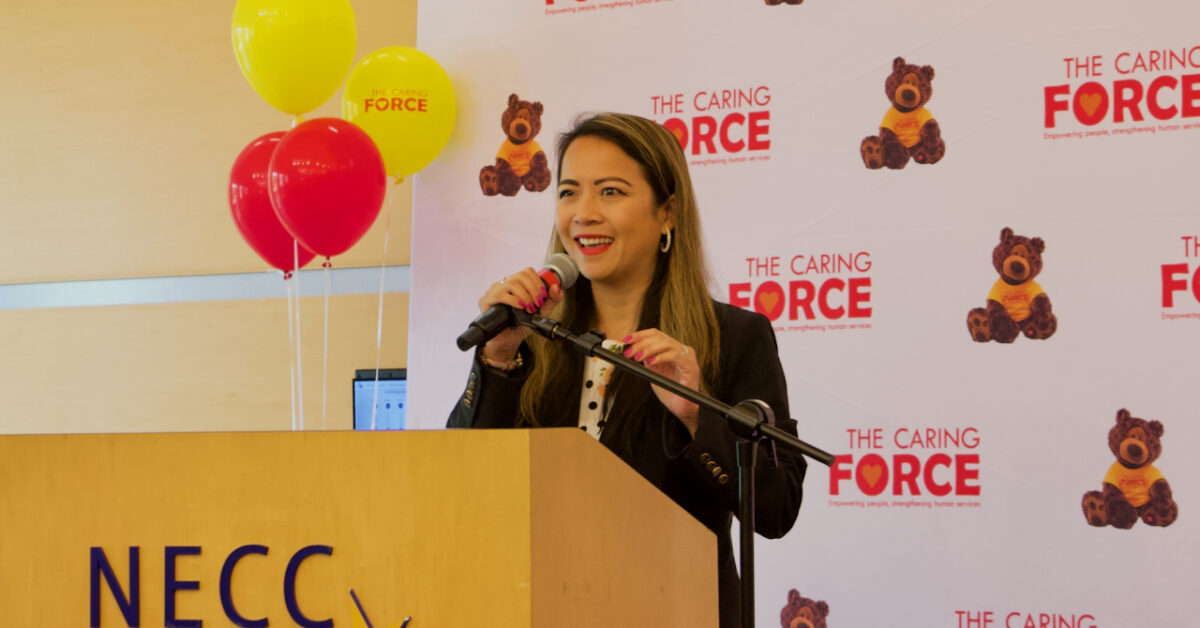
The Merrimack Valley Rally was organized by eleven regional human services organizations: Advocates, Community Resources for Justice, COMPASS, Justice Resource Institute, Key Program, NEEDS Center, NFI, Opportunity Works, Seven Hills Foundation, Vinfen, and Waystone Health and Human Services, with Northern Essex Community College hosting. Vinfen Vice President of Communications and Development David Brown served as emcee, and Representative Tram Nguyen of the 18th Essex district delivered the keynote, sharing her committed support to the sector, and Representative Ryan Hamilton, 15th Essex, attended as well.
Attendees heard about three key legislative priorities:
- Full funding for the Chapter 257 Rate Reserve (line item 1599-6903) in the FY’27 budget. The administration has said $260 million is needed to maintain rates at the 53rd percentile. The House-approved budget currently proposes $175 million, and The Caring Force is advocating for the remaining $85 million to be carried forward from FY’26 reserves to close the gap.
- An act relative to a livable wage for human services workers (S.119 | H.283), which would eliminate the pay disparity between community-based nonprofit workers and state employees performing similar work.
- An act relative to a loan repayment program for human services workers (S.130 | H.223), which would provide student loan repayment to workers who deliver essential services across the Commonwealth.
Three human services staff members shared their perspective on the need for these priorities through their experiences in the sector:
KyRon Parker, an Outreach Caseworker at The Key Program, reflected on his first year as a caseworker, mentoring youth through sports, mentorship, and weekly conversations. He described how progress often arrives in small victories, like a student making honor roll or a young person learning to walk away from conflict, and why a livable wage and loan repayment would let early-career workers stay in the field without the weight of educational debt holding them back.
Sophie So, an Assistant Director of Residential Services at the NEEDS Center with nearly ten years in the sector, started as a direct care worker earning $13 an hour. Now, an assistant director, she shared that her staff often work two or three jobs “not to live, but to survive,” and recalled working three jobs herself to cover her expenses and student loans. When wages reflect the value of the work, she said, people can build a real work-life balance and stay in a field that desperately needs them.
Desmond Heffner, a Residential Caseworker at The Key Program, spoke about growing up shaped by the very system he now works within, and being told repeatedly to avoid the field because the pay wasn’t enough. He connected all three priorities to the workforce crisis providers face, closing with a call to recognize the value of the sector: “When we invest in human services workers, we invest in human potential.”
Look out for information about our fall rallies in Westfield and Dorchester!
See photos from the event: